
From Classroom to Control Room: Why Every Young Process Engineer Must Understand the Future of Energy
“The future belongs to engineers who can solve tomorrow’s energy challenges—not just today’s engineering problems.”
Many fresh chemical engineering graduates wonder whether process engineering still offers exciting career opportunities.With headlines constantly talking about renewable energy, electric vehicles, hydrogen, artificial intelligence, and climate change, many students ask:
“Is oil and gas dying?”
The short answer is No. The real answer is much more exciting.
The energy industry is not disappearing—it is transforming faster than at any time in the last century. And this transformation needs a new generation of engineers who understand both traditional process industries and emerging clean-energy technologies.
If you’re a student, graduate engineer, or someone planning a career in process engineering, this is probably the most exciting time in history to enter the profession.
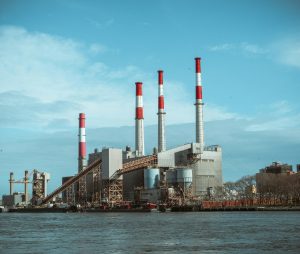
The Energy Story: 200 Years of Innovation
Every generation has witnessed an energy revolution.
- The 1800s were powered by coal and steam engines.
- The 1900s witnessed the rise of oil and natural gas.
- The late twentieth century saw massive growth in refineries and petrochemical complexes.
- Today, the world is entering an era where multiple energy sources work together.
Rather than replacing one another, energy sources are becoming complementary.
Oil and gas continue to supply a significant share of global energy, while renewable technologies are growing at unprecedented rates. Hydrogen, carbon capture, battery storage, and digital optimization are creating entirely new engineering opportunities. For process engineers, this means one thing:
The scope of engineering is expanding—not shrinking.
The Energy Industry of 2026: More Diverse Than Ever
Today’s energy landscape is built around diversity. Instead of depending on a single fuel, countries are investing in:
- Oil & Gas
- LNG
- Solar Power
- Wind Energy
- Hydropower
- Biomass
- Geothermal Energy
- Hydrogen
- Carbon Capture
- Battery Storage
Each technology requires engineers who understand:
- Thermodynamics
- Heat transfer
- Fluid mechanics
- Process safety
- Equipment design
- Process simulation
- Energy efficiency
Interestingly, these are exactly the subjects every process engineer studies during university. The difference is learning how to apply them in real industrial projects.
Why Process Engineers Will Always Be Needed
“Plants may become smarter, but engineering judgment will always remain human.”
A process engineer does much more than prepare calculations.
Modern engineers design systems that:
- produce cleaner fuels
- reduce emissions
- optimize energy consumption
- recover waste heat
- improve operational safety
- minimize operating costs
- increase plant reliability
Whether the project is a refinery, hydrogen plant, LNG terminal, fertilizer complex, carbon capture facility, or renewable fuels plant, process engineers remain at the heart of the design process.
The industry’s technologies may evolve, but the engineering principles remain remarkably consistent.

The Skills Employers Really Want
Many graduates believe employers hire based only on academic grades.
In reality, companies look for engineers who can combine theory with practical problem-solving.
Some of the most valuable skills include:
Process Simulation
Modern engineering relies heavily on software such as Aspen HYSYS, Aspen Plus, UniSim, PRO/II, and other simulation tools.
Mass & Energy Balance
Every design begins with understanding how material and energy move through a process.
Equipment Design
Understanding separators, pumps, compressors, heat exchangers, distillation columns, reactors, and storage tanks is essential.
Safety Engineering
Process safety is one of the highest priorities in every energy project.
Sustainability
Today’s engineers must understand emissions reduction, energy efficiency, and decarbonization strategies.
Data Analytics
Digital engineering and AI-assisted design are becoming increasingly important across the energy industry.
The Biggest Misconception About Energy Careers
Many graduates assume they must choose between:
- Oil & Gas
- or Renewable Energy
This is a false choice.
The future belongs to engineers who understand both.
For example:
- Hydrogen production often starts from natural gas.
- Offshore wind farms require offshore engineering expertise.
- Carbon capture systems are integrated into existing industrial facilities.
- Biofuels are processed using equipment familiar to refinery engineers.
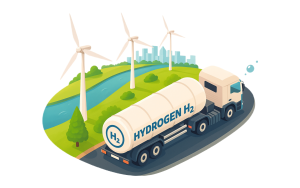
The world’s energy transition is creating hybrid industries where traditional engineering knowledge becomes even more valuable.
Learning Beyond University
University teaches engineering fundamentals.
Industry expects engineers to apply them.
Unfortunately, many graduates discover a gap between classroom learning and real industrial projects.
Questions such as:
- How is a separator actually sized?
- What information is needed before designing a heat exchanger?
- How are equipment datasheets prepared?
- Why are process simulations validated?
- How do engineering disciplines coordinate during EPC projects?
These practical questions are rarely covered in sufficient depth during undergraduate education.
Bridging this gap is often what separates an average graduate from an outstanding engineer.
The Future Belongs to Continuous Learners
The energy industry will continue evolving over the coming decades.
Artificial Intelligence, digital twins, carbon-neutral fuels, hydrogen infrastructure, advanced batteries, smart grids, and sustainable process technologies will reshape engineering careers.
However, one thing will never change.
Great engineers never stop learning.
As Albert Einstein famously said:
“Once you stop learning, you start dying.”
Continuous learning has become the most valuable engineering skill of all.

A New Learning Opportunity Is Coming Soon
Recognizing the growing gap between university education and industry expectations, we are developing a comprehensive Process Engineering Bridge Program specifically for:
- Final-year chemical engineering students
- Fresh graduates
- Graduate trainee engineers
- Early-career process engineers
The course is designed to help participants confidently transition from classroom concepts to real engineering practice.
You’ll learn through practical examples, industrial case studies, process simulations, equipment selection, engineering calculations, design philosophy, project workflows, and insights gained from years of experience in the energy industry.
Whether your goal is to work in oil & gas, LNG, petrochemicals, hydrogen, or renewable energy projects, this program aims to build the practical foundation employers value most.
Stay tuned—the course will be launching shortly. Kindly send your interest dropping an email in hr@valuegrowsolutions.com
Because the future of energy needs engineers who are ready from Day One.
Recommended Reading
- American Institute of Chemical Engineers (AIChE): https://www.aiche.org
- International Energy Agency (IEA): https://www.iea.org
- Energy Institute: https://www.energyinst.org
- Society of Petroleum Engineers (SPE): https://www.spe.org
- AspenTech Learning Resources: https://www.aspentech.com
- National Renewable Energy Laboratory (NREL): https://www.nrel.gov