Rebuilding After the Shock: Why the 2026 Energy Crisis Could Define the Next Generation of EPC Engineers
Introduction
The war between the United States and Iran, which escalated at the end of February 2026, began with the expectation that it would conclude within “a few weeks.” Instead, the conflict evolved into one of the most disruptive geopolitical events for the global energy industry in recent history. Objectives from multiple stakeholders remained unclear, while messaging from the United States shifted repeatedly throughout the conflict. Iran responded not only against nearby U.S. assets, but also against critical energy infrastructure across the Middle East.
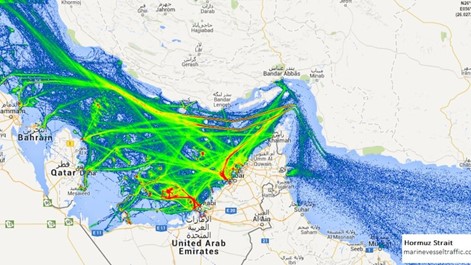
The defining moment came when the Strait of Hormuz — the world’s most important oil transit chokepoint — was effectively blocked. Nearly 20% of global oil supply normally flows through this narrow passage between Oman and Iran.
The result was immediate: crude oil prices surged, global markets became volatile, and governments around the world began preparing for prolonged supply shortages.
As process engineers and future EPC professionals, this crisis offers a powerful lesson: energy security is not just about production. It is about infrastructure resilience, rapid rebuilding, logistics, engineering execution, and the ability to restore systems under pressure.
“Every crisis creates two things simultaneously: destruction of capacity and demand for capability.”
The Global Impact of the Hormuz Disruption
The closure of the Strait of Hormuz triggered a massive supply shock across energy markets. According to IMF-linked projections, prolonged disruption could push oil prices toward $110–$125 per barrel while significantly slowing global GDP growth.
Fuel prices increased sharply across Asia and Europe. Strategic petroleum reserves were activated. Shipping insurance costs surged. Industrial sectors dependent on hydrocarbons — petrochemicals, fertilizers, refining, transportation, and power generation — experienced severe uncertainty.
The consequences extended far beyond oil markets:
- Stock markets dropped globally
- Inflation accelerated due to energy costs
- Supply chains weakened further
- Industrial production slowed
- Recession fears intensified
The IMF warned that a prolonged conflict could push global growth close to recessionary levels.
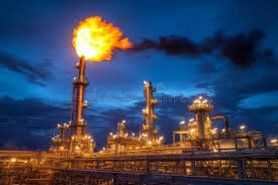
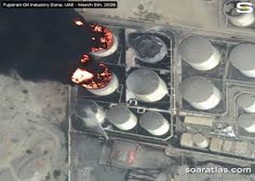
Meanwhile, the physical destruction of energy infrastructure created an even larger long-term challenge. Missile strikes, drone attacks, and operational shutdowns affected:
- Oil export terminals
- Gas processing facilities
- Storage farms
- Refineries
- Offshore loading systems
- Pipelines and pumping stations
- Ports
For the engineering world, this means one thing: rebuilding demand is coming.
Rebuilding the Energy Backbone
Historically, large-scale energy disruptions have always triggered waves of EPC activity. From post-war reconstruction in Iraq to LNG expansion projects in Qatar and refinery rebuilds after hurricanes in the United States, the pattern remains consistent:
Infrastructure destruction creates engineering demand at massive scale.
Below is a conceptual overview of likely rebuilding priorities emerging from the 2026 conflict.
| Country/Region | Infrastructure Affected | Estimated Rebuilding Timeline | Potential EPC Spend (USD) |
| Saudi Arabia | Oil terminals, pipelines, storage | 2–5 years | $25–40 billion |
| United Arab Emirates | Export logistics, offshore systems | 1–3 years | $10–18 billion |
| Qatar | LNG handling and shipping support | 2–4 years | $8–15 billion |
| Iran | Refineries, gas processing, pipelines | 5–10 years | $40–70 billion |
| Kuwait | Storage and export infrastructure | 1–3 years | $5–10 billion |
Why EPC Companies Become Critical During Crisis
Engineering, Procurement, and Construction (EPC) companies exist for exactly these moments.
When nations need:
- rapid facility assessment,
- process redesign,
- debottlenecking,
- brownfield expansion,
- modular construction,
- procurement acceleration,
- commissioning under tight timelines,
they turn to EPC organizations.
This is where young engineers often underestimate their future role.
A process engineer is not merely someone calculating line sizes or heat exchanger duties. In reality, process engineers become problem-solvers at national scale.
They help answer questions like:
- How fast can damaged capacity be restored?
- Which units should be prioritized?
- Can throughput be increased temporarily?
- How can fuel shortages be minimized?
- What alternative process routes are feasible?
In periods of reconstruction, process engineering becomes one of the most strategically valuable disciplines in the energy industry.
“Energy infrastructure is not rebuilt by capital alone. It is rebuilt by engineers who can turn uncertainty into systems.”

The Opportunity for Young Process Engineers
For students and early-career engineers aiming for EPC careers, the coming years may represent a major industry cycle.
Large-scale rebuilding creates demand for:
- Process engineers
- Piping engineers
- Instrumentation specialists
- Static and rotating equipment engineers
- Project planners
- Commissioning engineers
- HSE professionals
Particularly valuable skills will include:
- HYSYS simulation
- PFD and P&ID development
- Relief and flare analysis
- Brownfield modification studies
- Debottlenecking
- LNG and gas processing knowledge
- Modularization and fast-track EPC execution
The world may increasingly require engineers who can execute projects under compressed schedules with high efficiency.
Young engineers who combine:
- strong fundamentals,
- software capability,
- communication skills,
- commercial awareness,
- and adaptability,
will stand out globally.
This is where www.valuegrowsolutions.com can play a significant role through its 12 week flagship live online training in transformation of a fresh chemical engineer into an efficient process engineer with critical insights which are most sought after in interview. This will help unlock bright future and decades of successful problem solving at scale and earning in top dollars. Email to show interest to join the course: hr@valuegrowsolutions.com

Final Thoughts
The 2026 energy crisis is more than a geopolitical event. It is a reminder of how deeply interconnected engineering, economics, and global stability truly are.
While the headlines focus on war, oil prices, and diplomacy, another story is unfolding quietly in the background: the coming demand for rebuilding.
And that rebuilding will require engineers.
For young professionals entering the EPC and energy industry, this is not simply a challenging decade — it may become one of the most defining engineering cycles in modern history.
Link for email to join the course hr@valuegrowsolutions.com
External Reading & Statistics Sources